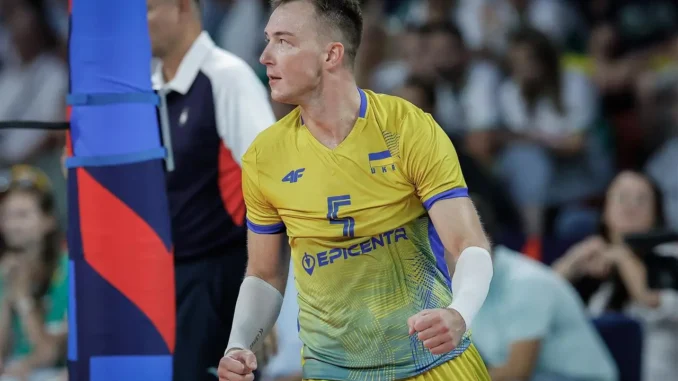

The group stage has reduced the field from 24 teams to 16. Three pool winners enter the first knockout round with clear advantages on paper, Belgium face a much more dangerous fourth seed, and the second-versus-third matchups bring the real uncertainty – including Ukraine against Romania and a potentially explosive Germany-Bulgaria clash in Sofia.
ROUND OF 16 PREVIEW | 19-21 September 2026 | Turin & Sofia
The group stage did its job. Finishing first produced a fourth-place opponent, second meets third, and the fixed bracket now makes every team’s potential quarterfinal route visible before the first knockout serve.
For Italy, France and Poland, the reward is obvious. Denmark, Portugal and Latvia all earned their places in the last 16, but the three pool winners showed a level of consistency that makes a major upset difficult to expect. Belgium’s reward is less comfortable: Czechia finished only fourth in Pool A, yet won three matches and have enough quality to turn that pairing into something much closer than a typical 1-vs-4 contest.
The deepest intrigue sits in the 2-vs-3 crossovers. Finland-Greece brings together one of the strongest Pool C teams and a Greek side that finished the group stage with three consecutive wins. Ukraine-Romania places a settled Ukrainian team back on the same Sofia court where its serve has already changed matches. Slovenia-Serbia tests Slovenian stability against a Serbian side that never fully settled in Tampere. And Germany-Bulgaria may be the closest matchup of the entire round, with Bulgaria playing in front of a home crowd that has already shaped the atmosphere of Pool B.
For the completed pool-stage picture, see our Men’s EuroVolley 2026 Group Stage Review. For the crossover system and fixed knockout route, see our Men’s EuroVolley 2026 Format & Rules guide.
Round of 16 at a Glance
| Date | Local time | Venue | Match | Group seed | Group records |
| 19 Sep | 16:00 | Sofia | Poland vs Latvia | B1 vs D4 | POL 4-1 | LAT 2-3 |
| 19 Sep | 19:00 | Sofia | Germany vs Bulgaria | D2 vs B3 | GER 4-1 | BUL 4-1 |
| 20 Sep | 16:00 | Sofia | Ukraine vs Romania | B2 vs D3 | UKR 4-1 | ROU 3-2 |
| 20 Sep | 19:00 | Sofia | France vs Portugal | D1 vs B4 | FRA 4-1 | POR 1-4 |
| 20 Sep | 16:00 | Turin | Finland vs Greece | C2 vs A3 | FIN 4-1 | GRE 3-2 |
| 20 Sep | 21:05 | Turin | Italy vs Denmark | A1 vs C4 | ITA 5-0 | DEN 2-3 |
| 21 Sep | 16:00 | Turin | Belgium vs Czechia | C1 vs A4 | BEL 4-1 | CZE 3-2 |
| 21 Sep | 21:00 | Turin | Slovenia vs Serbia | A2 vs C3 | SLO 3-2 | SRB 3-2 |
All start times are venue-local. Turin hosts the A-C crossover, while Sofia hosts the B-D crossover. There is no reseeding after the Round of 16.
Three Pool Winners Have the Draw They Wanted
Finishing first is supposed to matter, and for Italy, France and Poland the bracket reflects that advantage. All three face teams that qualified fourth from the crossover pool, and the group-stage gap is large enough that each favorite should expect to control the matchup rather than simply survive it.
Italy vs Denmark – Denmark Deserve Respect, but Italy Set the Standard
Italy were the only team to complete the pool stage 5-0, finishing Pool A with a 15-4 set record and 14 points. Even when Slovenia pushed the final group match to five sets, Italy still found the answer and secured first place.
Denmark’s fourth place in Pool C was one of the more pleasant surprises of the first phase. They beat both the Netherlands and Estonia – the two direct rivals for the final knockout ticket – and they were two sets ahead against Serbia before losing 2-3. That makes Denmark a legitimate last-16 team rather than a passenger in the bracket.
The problem is the matchup. Italy have more depth, more ways to score and a much larger margin for error. Denmark can make individual sets uncomfortable, but over a full best-of-five match Italy should have too many solutions.
France vs Portugal – France Look Dangerous Again
France finished Pool D first at 4-1 with a 14-4 set record. Their closing 2-3 defeat to Romania should not be treated as the defining result of the group: first place was already secure, and the match did not carry the same tournament pressure as the games that built their position.
The more important trend is that France again look like a serious force after an underwhelming VNL. They controlled most of Pool D and were particularly convincing in the 3-0 win over Germany.
Portugal reached the Round of 16 from fourth place in Pool B with one victory. Their qualification matters, but France showed a higher level across the week. For Portugal, the challenge is to stay close enough on serve and reception to stop the match from becoming one-way traffic.
Poland vs Latvia – Latvia Earned the Ticket, Poland Remain the Benchmark
Latvia did not back into the knockout stage. They secured fourth place by beating an injury-hit Türkiye 3-1 in the final round, taking control of their own qualification instead of waiting for another result.
Poland, however, had already separated themselves from the lower half of Pool B before the final matchday. Their 2-3 defeat to Bulgaria came after first place was already secured and during a match in which the champions rotated heavily, so it should not be read as a sudden collapse in level.
Latvia’s young group can serve aggressively and play without much pressure, but Poland’s depth, block-defense structure and experience make them the clear favorite.
Belgium vs Czechia – The 1-vs-4 Match That Could Be Much Closer
Belgium were the most stable team in the most balanced pool. They finished Pool C first at 4-1, beat Serbia 3-0 in the final round and consistently found ways through matches that rarely offered an easy rhythm.
But Czechia are not a typical fourth seed. They finished Pool A 3-2, beat Greece 3-1 and also collected wins against Slovakia and Sweden. Their losses came against Italy and Slovenia, which means their fourth-place label reflects the depth of Pool A more than a lack of quality.
That makes this the pool-winner matchup with the clearest upset potential. Belgium still deserve the edge because their group-stage level was more consistent, but Czechia have enough serving pressure and enough experience in close sets to turn it into a real knockout battle.
The 2-vs-3 Crossovers Carry the Real Knockout Drama
Finland vs Greece – Finland Showed the Higher Peak
Finland finished Pool C at 4-1 and produced two of the strongest wins in the group: a 3-0 sweep of Serbia and a five-set victory over Belgium. Their final 2-3 loss to Estonia prevented an even stronger finish, but the overall body of work was convincing.
Greece followed the opposite trajectory. They started with defeats to Czechia and Italy, then changed their tournament with three consecutive 3-1 wins over Slovenia, Sweden and Slovakia. By the end of Pool A, they looked much more settled than they had at the beginning.
The matchup therefore brings Finland’s stronger group-stage peak against Greece’s growing momentum. On what we saw in the first phase, Finland have the slight edge, but Greece arrive with enough confidence to make this one of the more open matches of the round.
Ukraine vs Romania – Ukraine Have the Tools, but Romania Have Already Broken Expectations
On paper, Ukraine are the favorite. They finished Pool B 4-1, beat Bulgaria 3-1 in front of 11,689 spectators and reached the final group match against Poland still unbeaten. Their only defeat came against the reigning champions.
Romania are a dangerous third seed rather than an easy draw. They went 3-2 in Pool D, pushed Germany to five sets and closed the group stage by beating France 3-2. That last result comes with an important qualification: France had already secured first place, so the match did not carry the same stakes for both teams. Romania nevertheless showed that they can stay in difficult matches and punish a favorite that loses control.
Ukraine’s strongest advantages are continuity and familiarity. They remain in Arena 8888 in Sofia, where they have already played all five group matches, while Romania move in from Cluj-Napoca. Ukraine also finished their pool one day earlier, giving them an extra recovery day before the Round of 16.
Then there is Oleh Plotnytskyi. His serve has repeatedly changed the shape of matches. Against Bulgaria, CEV highlighted his baseline pressure and key aces during the first-set turnaround. Earlier in the tournament he produced seven aces against North Macedonia, and against Portugal he finished with 19 points while converting 16 of 25 attacks – 64%. When his serve starts to run, Ukraine can create separation very quickly.
Romania’s task is therefore not only to side out efficiently, but to prevent Ukraine from building the kind of multi-point service runs that have already changed sets in this same arena. If Ukraine reproduce their Pool B stability, they should have the advantage. But Romania have shown enough to punish any drop in concentration.
Slovenia vs Serbia – Stability Against Uncertainty
Slovenia’s group stage was not perfect, but it looked recognisably Slovenian: structured, experienced and difficult to knock out of rhythm for long. They finished second in Pool A at 3-2, swept Slovakia and Sweden, beat Czechia 3-1 and pushed Italy all the way to a fifth set.
Serbia arrive with more questions. Their 3-2 record included straight-set defeats to Finland and Belgium, a five-set escape against the Netherlands and another five-set comeback against Denmark after falling 0-2 behind.
The Serbian ceiling is still high enough to make any single knockout match dangerous, but the group stage never showed consistent control. If Serbia reproduce that uneven level, Slovenia should have a clear advantage. Serbia need a much cleaner version of themselves – especially in serve-reception and in the opening phase of the match – to turn this into the classic heavyweight contest the names suggest.
Germany vs Bulgaria – The Closest Matchup of the Round
No Round of 16 pairing looks more balanced on the numbers. Germany and Bulgaria both finished 4-1 with 11 points. Germany posted a 12-7 set record in Pool D; Bulgaria finished 13-6 in Pool B.
Germany’s only defeat came against France. Bulgaria’s only loss came against Ukraine, before the hosts recovered to win their remaining matches and close the group stage with a 3-2 victory over Poland. That final result was encouraging, but it should be read with the context that Poland had already secured first place and used extensive rotation.
What cannot be discounted is the environment. Bulgaria stay in Arena 8888, where crowds repeatedly approached or exceeded five figures during the pool phase. The young Bulgarian team have openly described the home support as an extra source of energy, and the Round of 16 should raise the noise level again.
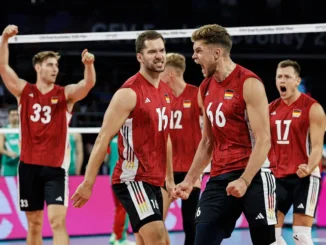
That home factor, together with Bulgaria’s attacking upside, gives the hosts a slight editorial edge in what still looks like a true 50-50-style knockout match. Germany have enough structure and serving quality to remove the crowd from the equation if they start well. Bulgaria’s challenge is to turn emotion into pressure without letting it become impatience.
Three Matches to Watch Most Closely
| Match | Why it stands out |
| Germany vs Bulgaria | The most even pairing on paper, with home-court pressure making every run feel larger. |
| Ukraine vs Romania | Ukraine have the stronger group-stage profile, but Romania have already shown they can drag higher-rated teams into long matches. |
| Belgium vs Czechia | The one first-versus-fourth matchup where the seed numbers may understate how competitive the match can become. |
Quarterfinal Paths – No Reseeding
The Round of 16 winners stay in their fixed bracket positions. That makes the next step visible already, even if the identities of the quarterfinalists are not.
| Quarterfinal path | Round of 16 winners | Hub |
| QF1 | Italy/Denmark vs Finland/Greece | Turin |
| QF2 | Belgium/Czechia vs Slovenia/Serbia | Turin |
| QF3 | Poland/Latvia vs Germany/Bulgaria | Sofia |
| QF4 | France/Portugal vs Ukraine/Romania | Sofia |
For Ukraine, that means the immediate task is Romania, but the reward is equally clear: the winner advances to face France or Portugal in the Sofia quarterfinal. Ukraine cannot plan for France before beating Romania, yet the bracket gives real value to the second-place finish they earned in Pool B.
The lower Sofia quarterfinal is potentially even more explosive. Poland are strongly favored against Latvia, while Germany-Bulgaria is the most balanced Round of 16 contest. That creates a path where one of the tournament’s major favorites could immediately face a very dangerous quarterfinal opponent.
What the Group Stage Does – and Does Not – Tell Us
Knockout previews become misleading when every final-day result is treated as equally meaningful. Poland lost to Bulgaria after first place in Pool B was already secured. France lost to Romania after winning Pool D was no longer at risk. Italy were pushed to five sets by Slovenia after both teams had already qualified.
Those matches still contain useful information about depth, execution and individual form, but they should not be weighted the same way as matches in which qualification or seeding remained fully live. That is why Latvia’s victory over Türkiye, Ukraine’s win over a fully motivated Bulgaria and Denmark’s direct wins over the Netherlands and Estonia carry a different kind of knockout relevance.
The Round of 16 resets the pressure. Rotation becomes shorter, every bad run matters more, and there is no next match for the loser.
Final Takeaway
The bracket has rewarded three pool winners exactly as intended. Italy, France and Poland should be expected to advance if they reproduce anything close to their group-stage level. Belgium have a less comfortable assignment against a Czech team whose fourth-place seed hides a 3-2 record and several strong performances.
The real uncertainty begins with the 2-vs-3 matchups. Finland were more convincing than Greece over five matches, but Greece finished with momentum. Slovenia were more stable than Serbia, but Serbian talent keeps the ceiling high. Ukraine have continuity, rest, venue familiarity and an in-form Plotnytskyi, yet Romania have already shown they can survive difficult matches. And Germany-Bulgaria looks almost perfectly balanced before home-court atmosphere is added to the equation.
From this point, there are no standings points to protect and no final-day rotations to explain. Eight matches will cut the field in half, and the route to Milan will become much clearer by Sunday night.
Editorial Note
This preview reflects the completed Men’s EuroVolley 2026 pool stage and the official CEV Round of 16 schedule available on 19 September 2026. Match times are listed in venue-local time.
Group-stage records, set records and match results are based on the final pool standings supplied by CEV and the completed match schedule. Statistical references to Oleh Plotnytskyi are based on official CEV match statistics and recaps.
Interpretive statements about matchup balance, team momentum, motivation, rotation and likely advantages are VolleyCommunity editorial analysis. Final-day results are assessed in the context of whether qualification or first place had already been secured.



1 Trackback / Pingback